Common Thread
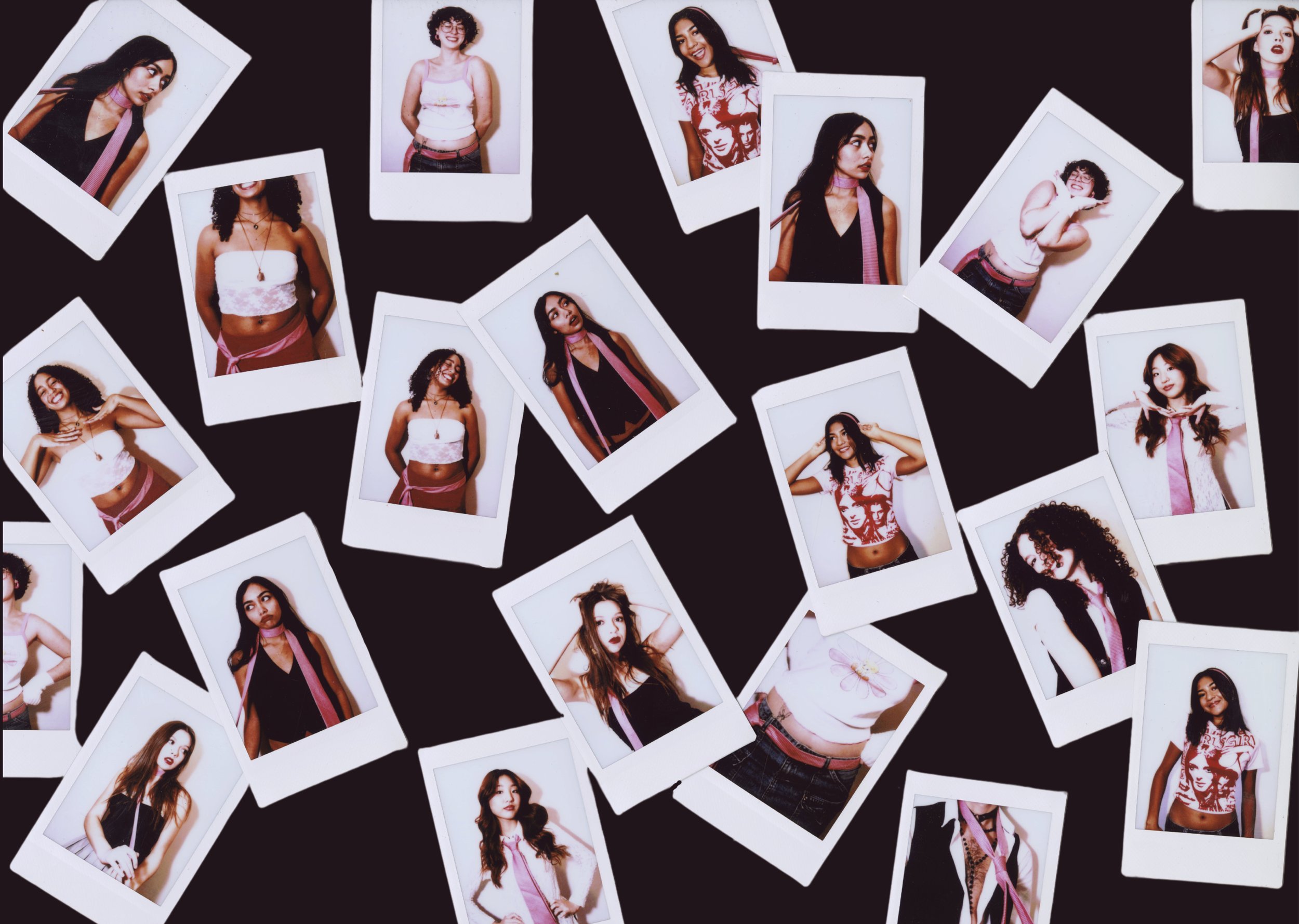
What’s TIE-ing us together?
Throughout girlhood, clothing ties us together. Put girls in close proximity, give them a place to go, and, more often than not, clothing will be exchanged. The beautiful thing about being entangled through clothing is that the same thing bonding you to others is simultaneously providing you with agency. Clothes allow you to define yourself without words. In new situations, you are often seen before heard; your style is the only part of a first impression that is within your control. What you do with your style is an assertion of autonomy in the face of assumption. For me, clothes ease the pressure to “perform” in new social situations. If I can win people over with my style before speaking, I am less desperate to impress verbally (and trust me, my desperation certainly does NOT impress).
For a long time I felt as though I had to choose one identity and keep it consistent. If I wanted to be smart, I could not dress “girly.” According to society (and practically every teen movie I ever watched) these were mutually exclusive traits. As I grew older, I found power in rejecting this false dichotomy. However, the “either/ors” do not let up. We must be individualist or collectivist. Isolated or entangled. Alone or clone. In the US, collectivism is associated with uniformity and loss of identity; individualism is put on a pedestal but leads to isolation and unrealistic expectations for oneself. In a society where independence is praised, it is seen as a weakness to rely on others. So what happens when we all rely on each other? Mutual reliance becomes collaboration. We share and then we make it our own. We are entangled individuals.
In this section, models were told to choose their own outfit incorporating the same pink tie. They arrived on set in an array of different colors, styles, and tie placements. From headband, to belt, to traditional necktie, individuality shone through and yet the common thread was just as central. When we borrow a piece of clothing and “make it our own,” we know that next week someone else can make it just as much theirs. To share clothes is to collectively deny the concept of exclusive ownership, a concept invented by and for capitalism. If capitalism is a game, then the way to “win” is to hoard assets and the “prize” is isolation. Opposing the “game,” even just by treating your closet as communal, creates and/or strengthens community within a society built to pull people apart.
The refusal to be pulled apart is symbolized in the shared tie. Just as the tie wraps around and through itself to create a knot that resists being undone, a shared garment ties us to each other, entangling us until bonds become hard to undo. In literary analysis, a “common thread” is a recurring element in different areas or bodies of work. It connects the unconnected, noticing similarities across genres. In fashion, thread holds garments together. It stitches sleeves to bodice to skirt. The tie is our common thread, it connects us as we are, without categorizing, and holds us together like this.